

LPPSA Home Construction Financing: Your Advantage as a Civil Servant
You have served the country. Now let your LPPSA eligibility build your family's home on your own land. A fixed 4.00% for the whole tenure — a term no commercial bank matches — with the instalment deducted straight from salary.
- Rate
- 4.00%
- fixed, reducing balance
- Financing limit
- RM1,000,000
- Maximum tenure
- 35 years
- Cash deposit
- RM0
23 min read · Checked
Share on WhatsAppShort answer
- A fixed 4.00% on a reducing balance for the whole tenure — it does not move when the OPR moves.
- Financing limit RM1,000,000: 4.00% up to RM750,000, 4.50% on the balance above it; applications expected to open in Q4 2026.
- The instalment on a first facility is capped at 60% of net income (basic salary + fixed allowances), less commitments, and deducted straight from salary.
- LPPSA approves the lowest of the contract price, the JPPH valuation, the amount applied for and your maximum eligibility; you pay any difference (wang beza) first.
- Salary deductions begin in the 25th month from approval, or after the 95% progress payment is released, whichever is earlier.
Why a fixed rate matters more than it looks
Bank housing loans in Malaysia are floating: they move when the OPR moves. On a RM450,000 loan over 30 years, a 1% rate rise adds roughly RM270 to your monthly instalment — and you have no control over it.
The LPPSA rate of 4.00% is fixed on a reducing balance for the whole tenure. The instalment you pay in year one is the instalment you pay in year thirty. For a family planning a long-term budget, that certainty is often worth more than the rate difference itself.
LPPSA also has no margin percentage the way a bank does. But it approves the lowest of four figures: the construction agreement price, JPPH's valuation, the amount you apply for and your maximum eligibility. If that figure is below the contract price, you pay the difference first, before LPPSA releases anything — your land's value does not cover it. What you still pay.
The eligibility rules, in full
These are the same figures used by our eligibility tool. Both read from one configuration file, so this page and that tool cannot contradict each other.
- Instalment cap — first facility
- 60% of net income (basic salary + fixed allowances), less existing commitments.
- Instalment cap — second facility
- 50% of net income.
- Total debt servicing ceiling
- All debt instalments together must not exceed 80% of net income.
- Minimum net salary retained
- You should still retain at least 20% of salary after all deductions. Cases on this boundary are reported as “Eligible With Conditions”, not as a rejection.
- Tenure
- The lower of 35 years and the time remaining until your retirement age.
- Financing limit
- RM1,000,000. 4.00% up to RM750,000; 4.50% on the balance above it. Applications expected to open in Q4 2026.
A worked example
Calculated directly from the rules alongside, not written out as text.
- Basic salary
- RM5,000
- Fixed allowances
- RM800
- Monthly commitments
- RM900
- Age / retirement
- 35 / 60
- Net income
- RM5,800
- Instalment cap (60% − commitments)
- RM2,580
- Tenure
- 25 years
Estimated eligibility RM488,000 Rounded DOWN to the nearest RM1,000 — deliberately, because a tool that rounds up creates a shortfall you only notice at the end. Roughly RM1,584 per RM300,000 borrowed at this tenure.
Run It With Your FiguresRates and rules effective 2026-09-23. Estimates only; the approval decision is made entirely by LPPSA.
How much LPPSA will approve: the lowest figure wins
Your eligibility is only one of four figures. LPPSA approves the lowest of the price in the building agreement, the JPPH valuation, the amount you apply for, and your maximum eligibility. If the contract price is higher than the approved amount, the difference (“wang beza”) must be paid by you first, before LPPSA starts releasing money.
Example: four figures, one approval
- Building agreement price
- RM380,000
- JPPH valuation
- RM360,000
- Amount applied for
- RM380,000
- Your maximum eligibility
- RM450,000
LPPSA approves RM360,000, the JPPH value. You pay RM20,000 to the contractor first, before LPPSA's staged payments begin. Illustrative figures only.
What “net income” means to LPPSA
Basic salary, plus the fixed allowances it counts, minus mandatory deductions. The 80% total-debt ceiling is measured against this figure.
Fixed allowances counted: ITP, ITKA, ITK, ITKT, ITJU, EPW, acting allowance, COLA, BIW, BISM and BISS.
Mandatory deductions subtracted: EPF, SOCSO, income tax, civil and Syariah court orders, salary refunds, and Federal, State or statutory-body housing loans.
Not subtracted: zakat, the armed forces' special deduction, and savings such as ASB, Tabung Haji and SSPN. LPPSA also ignores outside deductions that are not on your payslip.
Not counted as income: periodic payments such as salary arrears, covering allowances, overtime and Bantuan Khas Kewangan.
LPPSA's maximum eligibility table
Even if your instalment could carry more, the amount is also capped by net income. This is the table in LPPSA's Garis Panduan Pembiayaan Perumahan Bil.1/2026.
| Monthly net income | Maximum eligibility |
|---|---|
| RM6,500 and above | RM750,000 |
| RM6,000 | RM720,000 |
| RM5,700 | RM680,000 |
| RM5,500 | RM650,000 |
| RM5,000 | RM600,000 |
| RM4,700 | RM560,000 |
| RM4,500 | RM540,000 |
| RM4,300 | RM510,000 |
| RM4,000 | RM470,000 |
| RM3,800 | RM450,000 |
| RM3,500 | RM420,000 |
| RM2,900 | RM340,000 |
| RM2,300 | RM270,000 |
| Up to RM1,700 | RM200,000 |
LPPSA states the table is a reference only; the actual limit is what the Board approves. The table stops at RM750,000; the RM1,000,000 limit in the 2026 announcement is expected to open for applications in Q4 2026. Members of the administration, legislators and judges follow separate rules.
Tell me when LPPSA's RM1,000,000 limit opens
LPPSA has announced a financing limit of up to RM1,000,000, with applications expected to open in Q4 2026. Send us a WhatsApp message and our team will let you know when it opens.
Notify me on WhatsAppThe type 2 route, from plans to your first salary deduction
This is the sequence set out in LPPSA's guidelines and JPPH's procedure for building on your own land. Most delays happen at the hand-over from one step to the next, when a document is not ready.
- 1 The contractor and the plans, first. LPPSA expects you to make sure the contractor is registered with CIDB in the construction field before you apply. The building plan must be approved by the local council or the District Office and still be valid. LPPSA does not finance preparing the plans or preparing the site, so budget for both yourself.
- 2 Sign the building agreement. LPPSA accepts the agreement or a draft of it, as long as it states the property type, lot number, title number and price. What is financed is the construction cost in that agreement's payment schedule, and payments follow the Third Schedule to Schedule G of the Housing Development (Control and Licensing) Act 1966.
- 3 Apply for the JPPH valuation. Send the valuation form to the JPPH office for the district where the land is, with your Head of Department's covering letter, a copy of your LPPSA form, a certified copy of the title, your identity card, the building agreement, the approved plan and a list of building material specifications signed by you and the contractor. Government officers pay no fee; staff of statutory bodies and local councils may be charged one. JPPH's charter is 8 working days from receiving a complete form, and the report goes straight to LPPSA. LPPSA only processes your application once that complete report arrives.
- 4 Submit through your Head of Department. Fill in the form on LPPSA's portal, print it, have it signed by you and your Head of Department, then submit it through your department with certified copies arranged in checklist order. This is also where you choose SPPSA (conventional) or SPPSAi (Islamic), and that choice cannot be changed after approval.
- 5 Accept the offer, hand it to your lawyer. Return the letter of offer (LO) with the Memorandum of Acceptance to your documentation lawyer within 30 working days of the approval letter. An appeal on the approved amount can only be made before you accept the offer. MRTA/MRTT cover takes effect at pre-acceptance on the portal, and the insurance/takaful panel cannot be changed after that.
- 6 The charge is registered. The land is charged to LPPSA as first chargee. The lawyer runs a private search on the title and a bankruptcy search, and the contractor gives a letter of undertaking (LU) to refund every payment if the building is abandoned for any reason at all.
- 7 Staged payments straight to the contractor. Money is released to the contractor or the stakeholder lawyer, against JPPH progress reports up to 95% completion. Each claim goes to JPPH with a copy to LPPSA, and a JPPH officer inspects the site first. The first claim needs the Borang Perakuan Lot Hartanah and a registered professional surveyor's certificate; the 95% claim needs the key-handover letter and the deposit receipts for the electricity and water meters. The last 5% is paid when LPPSA receives the CF or a copy of the CCC, or six months after the 95% payment, whichever is earlier.
- 8 Salary deductions begin. The instalment, and the interest/profit calculation, begin in the 25th month from the approval date, or after the 95% progress payment is released, whichever is earlier. If the 95% payment goes out on or before the 15th, deductions start the following month; if after the 15th, two months later. Deductions are made after EPF and income tax, and your department remits them to LPPSA before the 25th.
What this means for the family budget: during construction, your salary is not yet deducted for this house until the 95% payment goes out, for at most 24 months from the approval date. If you are still renting, plan the rent for that period, and remember deductions begin in the 25th month even if the house is not finished.
Legal fees: if the actual fee for the financing documentation is higher than the approved estimate, you pay the difference first; if it is lower, the difference reduces the principal. Fees for a sale and purchase agreement, transfer, caveat, stamp duty and statutory declarations cannot be financed.
Documents you will need
Land conditions for type 2: a single lot with an individual title, free of any charge or encumbrance, and owned solely or jointly with your spouse, or jointly between parent and child (LPPSA Guidelines Bil.1/2026, paragraph 7.4.2(i)). If the land is still charged to a bank, that charge has to be discharged first.
- Completed LPPSA application form, signed by you and your Head of Department
- Applicant's identity card (and spouse's, for a joint application)
- Latest three months' payslips, certified by your Head of Department
- Head of Department confirmation letter (original), in LPPSA's format
- An official or private title search made within the last 12 months
- Proof that JPPH has received the valuation form (the acknowledgement receipt)
- The plan approval letter and a copy of the plans approved by the council or District Office
- The building agreement, or its draft
- A copy of the contractor's CIDB registration certificate
We prepare the approved plans, the building agreement (or its draft) and a copy of our CIDB certificate. The rest is your side. The full list is in the official checklist below, and what LPPSA asks of a contractor is on the LPPSA house contractor page.
The right order
- Check your estimated eligibility.
- Make sure your land is clear of blockers.
- Choose a design and get a formal quotation from us (free).
- We handle the council submission.
- Sign the building agreement (or its draft) with us, and apply for the JPPH valuation.
- Submit your LPPSA application through your Head of Department, with the approved plans and the building agreement.
- Construction begins; LPPSA pays against verified progress claims.
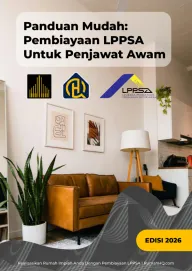
Free guide, in Malay
Panduan Mudah: LPPSA Financing for Civil Servants
Our team's 36-page guide: the seven types of LPPSA financing, who qualifies, the documents, takaful cover and legal fees, in plain Malay.
Download the guide (PDF, 5.3 MB)Written in November 2025, the book gives the old RM750,000 limit. LPPSA has since announced RM1,000,000.
For the detail-minded
Further reference
The rules and details behind the guide above. Open only what applies to you.
The seven types of LPPSA financing
The seven things LPPSA finances, and which one building on your own land is.
LPPSA numbers its financing by what it pays for. The type decides the rules, the documents and when the money is released. We handle types 2, 6 and 7.
-
Type 1
Buying a completed house
A house or strata unit that is already built, from a developer or a private seller.
-
Type 2
Building on your own land
The route for our clients: land in your name, plans approved by the council, paid in stages to the contractor.
We handle this → -
Type 3
Buying a house under construction
From a developer or a contractor, with the developer's licence and sales permit recorded in the sale agreement.
-
Type 4
Buying land to build a house
Up to 50% of your full eligibility, so the rest remains for building.
-
Type 5
Settling an existing bank loan
Moving a housing loan from a bank to LPPSA, within your eligibility.
-
Type 6
Building on land bought with LPPSA
The second half of type 4: once the land financing is being deducted with no arrears.
We handle this → -
Type 7
Renovating your house
For a house financed or settled through LPPSA: extensions that add floor area on the same lot, valued by JPPH.
Who may apply
Who must meet LPPSA's conditions, and who cannot apply.
You must be
- A Malaysian citizen
- A permanent officer who has served for at least one year
- Confirmed in your post
You may not apply while you are
- Bankrupt
- Facing disciplinary proceedings
- Employed on contract
Each person has two financing entitlements. The second is allowed once the first is settled, except type 7 (renovation), which does not need the first settled. Types 4 and 6 together count as one.
The rules for type 2: building on your own land
Seven conditions: approved plan, an empty lot, the title, joint ownership and when work may start.
- 1 The building plan is approved and still valid. An expired approval has to be renewed with the council first.
- 2 The financing covers the construction cost in the contract schedule. LPPSA does not finance preparing the plans or preparing the site.
- 3 The lot is empty. There must be no existing building on it.
- 4 The land is yours, or shared within the family. Wholly the applicant's, or jointly held between husband and wife, or parent and child.
- 5 One lot, with an individual title and no encumbrance. The house is built to the plans submitted with the financing.
- 6 Joint financing needs a transfer. If one applicant is not on the title, part of the land is transferred to them first (Form 14A in the Peninsula).
- 7 Work starts only after approval. Construction must not begin before the financing is approved.
The cover that comes with LPPSA financing
The insurance and takaful that come with the financing, compared.
Every LPPSA borrower is covered in two ways, arranged through LPPSA's insurance and takaful panel.
| Item | MRTT / MRTA | LTHO |
|---|---|---|
| What it protects | You, the borrower | The house |
| What it pays for | Settles the balance of the financing on death or total and permanent disability | Damage from fire, lightning and a domestic gas explosion |
| From when | From the day you sign the financing | Types 2, 3, 4, 6 and 7: once 95% has been released. Types 1 and 5: from approval |
| Worth adding | — | Flood, storm, burst pipes, landslide and fallen trees, by arrangement with the panel |
Legal fees: what LPPSA pays and what you pay
Which legal fees LPPSA pays, and which you pay yourself.
LPPSA finances
- The legal fees for the financing documents, added to the amount financed
- Stamp duty on the principal financing document (SPPSA or SPPSAi) is exempted
You pay
- Legal fees for the sale and purchase agreement
- Statutory declarations
- Transfer costs and their stamp duty
- Caveats
Ask your lawyer for a quotation and submit it on LPPSA's own template with your application.
Other advantages worth knowing
Islamic or conventional, no lock-in, salary deduction and up to 100% financing.
-
Islamic or conventional
You choose when you apply.
-
No lock-in period
You can sell and settle the financing at any time.
-
Salary deductions, not your credit report
LPPSA looks at the commitments deducted on your payslip, and does not require a clean CTOS or CCRIS record the way banks do.
-
Up to 100% financing
Subject to your eligibility and the valuation.
Source: our guide Panduan Mudah: Pembiayaan LPPSA (November 2025), from LPPSA's Pekeliling Pembiayaan Perumahan Bil. 1/2021. Confirm the current rules with LPPSA before you apply.
When plans change halfway
Changing plans or contractor, cancelling the financing, leaving service, unpaid leave: what LPPSA sets out.
A build takes months, and LPPSA financing runs for decades. This is what LPPSA sets out for when things do not go to plan, so you know your options before it happens.
-
The plan cannot change after approval
LPPSA does not allow amendments to the original plan after the financing is approved, and its checklist warns that doing so affects the release of progress payments. Settle the design, rooms and sizes before you apply, not once the site is moving.
-
The contractor can be changed, on conditions
For type 2, changing contractor is allowed as long as release has not reached 100%, the house plan stays as approved, and the new contractor is registered with CIDB. The new contractor is paid only from the balance not yet released. LPPSA asks for the termination letter to the old contractor, an indemnity letter, the new contractor's letter of appointment, a new building agreement, and the new contractor's CIDB certificate.
-
Cancelling the financing
If you cancel for personal reasons after any property payment has been released, it counts as your first entitlement used, and the amount released must be repaid. Cancellation is not allowed after 100% of progress payments. If cancelled less than a year from the approval letter with no property payment made, repayment can be exempted from interest, subject to LPPSA's approval.
-
Leaving the service
Leaving the service (other than compulsory or optional retirement) ends the financing. The 4.00% rate is kept only if the balance is settled in one payment within 30 days; otherwise 7% a year is charged on the outstanding principal as a civil debt. Moving to another scheme of service without a break in service does not affect the rate, if you submit the new letter of appointment, the release-with-permission letter and confirmation of unbroken service.
-
Unpaid leave
Repayment can be deferred for approved unpaid or half-pay leave of at least a year, if you have no arrears. Apply within 30 days of the leave approval letter. Interest/profit still accrues through that period and is spread over the remaining tenure, and the additional MRTA/MRTT premium is yours to pay.
-
If something happens to you
On death or total and permanent disability, the MRTA/MRTT compensation is paid to LPPSA to settle the balance. Interest/profit is counted only up to the month before that date. Any surplus is returned to you or your heirs; if the compensation falls short, the balance has to be settled by you or your heirs.
The interest exemption and rescheduling relief for “abandoned projects” in LPPSA's guidelines depends on KPKT or KKTP confirming the project's status. For a house on your own land, the route written plainly in the guidelines is changing the contractor, and the contractor's undertaking to refund payments.
LPPSA's official type 2 checklist: what gets missed most
The items on LPPSA's own checklist that are easiest to overlook.
LPPSA's own checklist warns that an incomplete application delays the review. These are the items on it that are easiest to overlook.
- Head of Department's confirmation letter (original)
- from your current place of duty, dated and with a reference number, in the format on LPPSA's website.
- Your latest three months' payslips
- certified by your Head of Department. JANM payslips, or others carrying a QR code, are exempt from certification.
- The title, an official search or a private search
- made within the last 12 months and still valid when approval is made. If the title details differ from the agreement, include your lawyer's confirmation.
- Proof that JPPH received the valuation form
- because the application is only processed once JPPH's complete report is received.
- The plan approval letter and a copy of the plan
- from the local council or District Office, still valid.
- The building agreement or its draft
- with the property type, lot number, title number and price.
- The legal-fee quotation on LPPSA's template
- if you want the financing documentation fees included in the financing, complete with your name, identity card number and property details.
- Form 14A (Peninsula) or MOT (Sabah/Sarawak)
- if applying jointly and one applicant is not yet on the title.
- Marriage certificate or child's birth certificate
- for joint financing between husband and wife, or parent and child.
- Pension estimate certified by your Head of Department
- if you are 55 or older, or have 5 years or less of service left before pension.
- Confirmation of a pensionable post
- if you chose the pension scheme but your payslip still shows EPF deductions.
Sources: LPPSA's Garis Panduan and Pekeliling Pembiayaan Perumahan Bil.1/2026, LPPSA's type 2 checklist, LPPSA's FAQs, and JPPH's valuation procedure, checked 23 September 2026. Download the current checklist from LPPSA before you apply, because it is updated from time to time.
Frequently asked
Who can apply to LPPSA?
Is the 4% rate genuinely fixed?
What is the maximum financing limit?
Which allowances are counted?
Can I apply if I have had LPPSA financing before?
What happens if I retire or move to the private sector?
Can I build with LPPSA if the land is in my spouse's name?
My spouse works in the private sector. Can we apply jointly to build?
I do not own land yet. Can I buy land and build at the same time with LPPSA?
My land is agricultural. Will LPPSA accept it?
Can I use my first and second financing for two houses on the same lot?
What is the rate difference between SPPSA and SPPSAi?
Can I settle the financing early?
Can RumahHQ guarantee approval?
We are a registered LPPSA panel contractor



Golden Sharp Innovation (IP0580950-X) is a registered panel contractor with the institutions above. Panel status means our credentials as a contractor have been assessed, and our progress-claim documents follow the format these institutions expect — it is not a guarantee that your financing will be approved, and not an endorsement of our services by them. Approval and terms are determined entirely by LPPSA or the bank concerned. Logos and trademarks are the property of their respective owners.
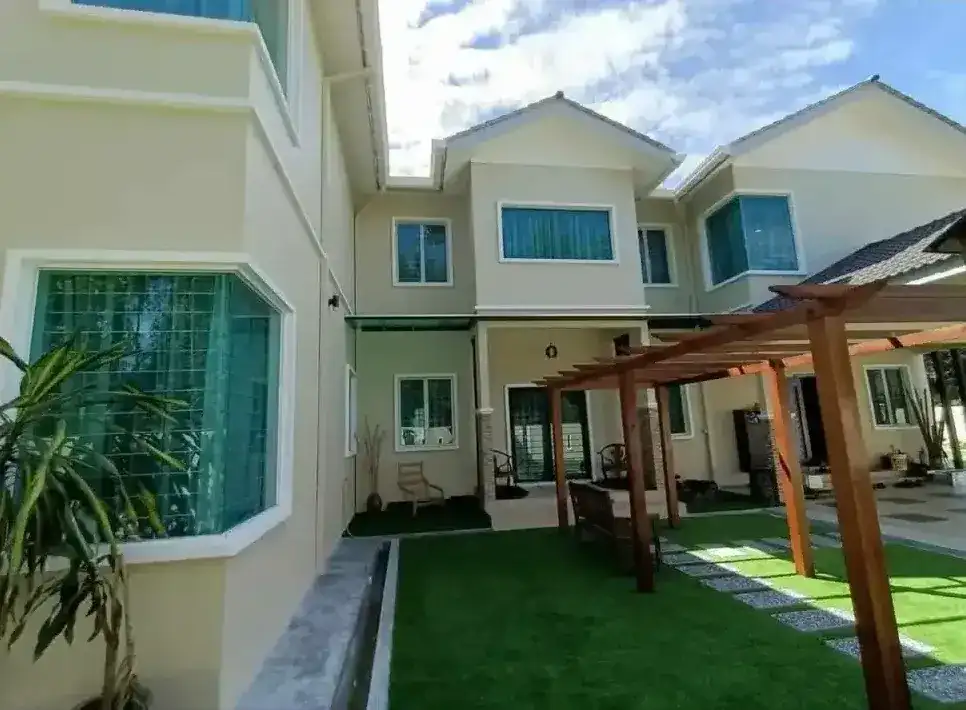
Check your LPPSA eligibility now
One minute, and we tell you the estimated amount, instalment, tenure — and which rule is capping you. Your income figures are not stored on this site.